





Six dedicated centres shaping analysis and policy across the Horn of Africa
Objective and independent insights and analysis featured across national and international media
Evidence-based advisory services to support informed decision-making
Evidence-based advisory services to support informed decision-making
Evidence-based advisory services to support informed decision-making
Nine Strategic Programs Designed to Analyse, Influence and Shape the Future of the Horn of Africa
Nine Strategic Programs Designed to Analyse, Influence and Shape the Future of the Horn of Africa
Nine Strategic Programs Designed to Analyse, Influence and Shape the Future of the Horn of Africa
A leading think tank driving research, policy, and regional dialogue
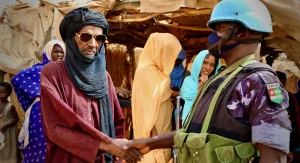
Examines the complex dynamics shaping peace, security, and human mobility across contested and peripheral border zones in the Horn of Africa and Great Lakes region
FOCUS AREAS
Cross-Border Conflict Dynamics
Community-Led Reconciliation
Ethnic & Clan Tensions
Peacebuilding Frameworks
ABOUT THE PROGRAM
Border zones in the Horn of Africa and the Great Lakes region are among the most analytically underserved and politically neglected spaces in the continent’s security landscape. They are frequently characterised by weak or contested state authority, cross-border armed movement, ethnic and clan tensions, transboundary resource disputes, and population displacement. Yet they are also spaces of significant social complexity, shaped by longstanding cross-border trade networks, pastoral communities whose livelihoods span state boundaries, inter-community relations built over generations, and local governance structures that exercise real authority in the absence of effective state institutions.
The Borderlands and Peacebuilding Program hence examines the border zones as strategic spaces for peacebuilding, where well-designed, context-sensitive interventions can reduce violence, strengthen local governance, and build the social foundations for durable stability. The program analyses the interaction between porous borders, armed movements, resource competition, migration and local governance, and develops policy responses grounded in the specific conditions of borderland communities. Through research, policy dialogue, reports, and decision-oriented briefs, the program advances integrated approaches that align border management with peacebuilding frameworks, inter-community dialogue, and long-term regional stability.
CONTACT INFORMATION
Elizabeth Radina
Ag. Associate Director, Partnerships, Outreach and Strategic Communications
+254 720 323 896 · +254 735 323 896
Key Activities
The HORN Security Debates
Symposium
In 2019, the HORN Institute organized an Experts Symposium on Maritime Border Challenges and Implications on Security. The symposium examined the legal, political, and security dimensions of maritime boundary disputes, highlighting their implications for regional stability, resource governance, and interstate relations
Roundtable
In 2019, the HORN Institute organized a Roundtable Discussion on Kenya-Somalia Maritime Border Dispute. The roundtable explored the historical context, legal arguments, and geopolitical implications of the dispute, while assessing its impact on bilateral relations and regional security dynamics
Program Associates & Fellows
Fatima Cardoso, PhD.
Senior Fellow
Ayan Nuriye
Fellow
Mercy Chepkirui Lagat
Fellow
FEATURED ANALYSIS
VIEW ALL ANALYSIS