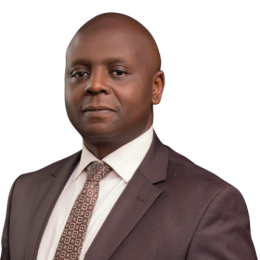
The election of Hassan Sheikh Mohamud as president of Somalia on May 15, 2021, is an important milestone and a watershed moment following months of delays, uncertainty and tensions. It is no surprise therefore that his election was received with celebration in Mogadishu. Of importance, was the diplomatic warmth with which his election was received in various regional capitals, especially Nairobi. Hassan Sheikh Mohamud received 214 votes to beat the incumbent, Mohamed Abdullahi Mohamed alias Farmaajo, who received 110 votes from the total of 324 members of parliament. After two rounds of voting, the main opposition candidates (Hassan Khayre, Abdullahi Deni, and Sharif Sheikh) endorsed Mohamud’s candidature against Farmaajo hence securing his victory. Mogadishu erupted with gunfire celebrations as the election entered its third round between Mohamud and Farmaajo, an expression of the public’s eagerness for change and an early sign of a new dawn in Somalia.
Farmaajo’s Troubled Term
Domestically, Farmaajo had strained the relationship between the Government of Somalia (FGS) and the five Federal Member States (FMS), dashed hopes for a Somalia–Somaliland dialogue and possible re-unification, and failed to complete the constitution-making process. He had also squeezed the political space by politicizing the security agencies and controlling parliament to perpetuate authoritarianism control of state institutions. His last-minute attempts to cling to power through electoral interference and manipulation had further deeply divided the country and rendered the federal government dysfunctional as it led to his fallout with the Prime Minister, Mohamed Roble. After a dangerous attempt to extend his term using parliament led to violent confrontations between government and opposition forces in April 2021, a compromise arrangement to save the country from catastrophe, transferred caretaker powers to the Prime Minister, who he later tried to overthrow militarily.
Strained Regional Relations
Regionally, Farmaajo’s Somalia was unpredictable and capricious. Somalia obstinately stuck at the International Court of Justice over its maritime dispute with Kenya and shunned regional and continental attempts at a peaceful and negotiated win-win settlement. After a series of lows in Somalia–Kenya relations, Mogadishu dramatically cut ties with Nairobi in December 2020 over allegations of interference in its internal affairs which were ultimately dismissed by IGAD’s fact-finding mission. Farmaajo’s Somalia also created divisions within the Intergovernmental Authority on Development (IGAD), already ailing from leadership and political differences between important member states, when it accused the regional body of partisanship and threatened to withdraw its membership for voiding Somalia’s allegations against Kenya.
Lastly, Farmaajo’s Somalia maintained an informal ‘tripartite’ security alliance with Ethiopia and Eritrea, a pseudo trans-national ethnopolitical outfit known variously as the ‘Cushitic alliance’ through which the three countries nearly created a contagion of instability in the Horn of Africa given their roles in the conflict in Ethiopia’s Tigray region, the Sudan–Ethiopia border conflict, the crisis in Gedo region of Somalia, and the subsequent weakening of IGAD. Ethiopia, for instance, had developed pervasive influence in Somalia politics and extended ‘mercenaries’ to Farmaajo through its non-AMISOM forces. While the Alliance’s intentions might have been positive, the activities were malign and the net impact was politically catastrophic for regional unity.
Prospects of Possible Shifts in Policy
Internal Reconciliation
While it may be premature to predict the new administration’s approach to many issues facing Somalia, many have described Hassan Sheikh Mohamud as a dove with a calm and collegial approach to governance. He has demonstrated this by announcing that political reconciliation and unity are top of his priorities. Reaching out to the opposition and restoring a functional and less contentious relationship between the centre in Mogadishu and the federal member states will be critical to Somalia’s security and political stability. Carefully managing the ‘clan’ conundrum while building institutions for sustainable peace will be central to Somalia’s internal cohesion as well as its ability to succeed in regional diplomacy.
Somalia- Gulf Relations
In the few days of his presidency, he is mending ties with Somalia’s foes created under Farmaajo. For instance, Somalia is finally ceding to UAE a sum of USD 9 million seized by Farmaajo’s government in 2018 at the height of the Gulf Crisis. Last year, Prime Minister Roble lost his bid to return the cash to the UAE courtesy of Farmaajo’s obstruction. While the fallout with UAE should be seen from the lens of the Gulf crisis, it cost Somalia significant budget support for salaries for its forces and an important military assistance package. As UAE and Saudi Arabia cooled ties with Mogadishu, the geopolitical power shifted to the Qatar–Turkey alliance. With the ongoing intra-gulf rapprochement, the election of Sheikh Mohamud is thus likely to occasion either a slight power shift back to UAE-Saudi Arabia or a balance of power between the two rival blocs considering the heavy Turkish support that is by far the most established in soft power projection in Mogadishu.
Return of US Forces
The United States which had withdrawn forces from Somalia under President Donald Trump has also announced a shift in policy. Washington D.C. will be redeploying troops to Somalia to bolster counter-terrorism efforts in the country partly because of the new president’s consistent record against terrorism. There is a realization in both Washington D.C. and Mogadishu, that the threat posed by al Shabab and other militant organizations in Somalia remains real and more challenging to state-building and regional security. Mohamud has, for instance, consistently addressed the threat posed by al Shabab in his campaign and made counterterrorism a top priority of his presidency. US troops’ return signals renewed confidence that the new administration will be more cooperative in the security realm. Troop return, however, must be accompanied by development assistance, institutional and technical support and democratic assistance toward universal suffrage, political inclusion and expanded personal freedoms.
Regional Posture
Among the first regional leaders to congratulate President Hassan Sheikh Mohamud on his election, were Kenya’s Uhuru Kenyatta, Ethiopia’s Abiy Ahmed, Tigray region’s Debretsion Gebremichael, Djibouti’s Ismail Guelleh, as well as IGAD Executive Secretary, Workneh Gebeyehu. The tripartite agreement between Somalia, Eritrea and Ethiopia had weakened IGAD, fueled the Tigray conflict, and isolated Djibouti. Somalia was also increasingly escalating hostility towards Kenya at the expense of regional cooperation, trade and security ties between the two countries. As the region warms up to a conciliatory president, Mogadishu looks set to change its regional posture, initiate rapprochement with Djibouti, reverse its belligerent policy on Tigray and re-assess the tripartite alliance with Ethiopia and Eritrea in the interest of its own security and image as well as regional stability. With Somalia likely to play a more constructive role in the region, IGAD’s role in peace and security in the Horn of Africa will be strengthened. Finally, Somalia might consider a peaceful settlement of its maritime dispute with Kenya for the mutual interest of the two countries, save for the pervasive foreign interests in maritime resources on their shared coasts that have partly fueled hostilities between the two nations.
The Bottom-line
The election of Hassan Sheikh Mohamud brings to an end a convoluted and protracted election process which began in 2020. The crisis was caused in large part by Farmaajo’s perceived desire to stay in power and failure to act in concert with relevant national stakeholders. The exit of Farmaajo symbolizes possible policy shifts which are likely to reconfigure geopolitical alignments in the Horn of Africa and affect the nature and extent of the region’s integration. Somalia is likely to wear a new character in the region and positively contribute more to the region’s security, peace and economic development.
The inverse is also true, as the region and the international community are more likely to increase their involvement in Somalia’s security and stability, as evidenced by the United States and United Nations’ renewed efforts in Somalia. Hassan Sheikh Mohamud’s tray is full of tasks ranging from unifying the country politically and fighting the resurgent al Shabab, to handling the hunger and starvation crisis and rebuilding state institutions. Success in the tasks ahead will depend in large part on Sheikh’s ability to forge wider regional and international cooperation and partnerships. To do that, a policy shift is not only necessary, it is mandatory.