On 25 April 2026, jihadist armed group Jama’at Nusrat al-Islam wal-Muslimin (JNIM) and the Tuareg Azawad Liberation Front (FLA) launched coordinated attacks on urban centres and military installations in Mali. They attacked the capital Bamako and captured the city of Kidal, driving out Russian mercenaries and Malian security forces. Sadio Camara, the Malian Defence Minister, was also assassinated in a suicide bombing. This offensive and seizure of territory is the most recent escalation in a conflict between jihadist groups, armed rebels and state security forces in Mali and the broader Sahel region – the global epicentre of violent extremism in 2026. In the wake of these attacks, what does this worsening security landscape mean for the Horn – another African region tackling jihadist armed groups? What does it signal about trends in violent extremism, and what warning signs does it offer for policy makers and analysts in the Horn region?
Worsening security in Mali
Over past decades, the Malian state has reckoned with diverse threats to its national security from Tuareg rebellions in the early 2010s to the rise of JNIM since 2017 – an Al-Qaeda affiliated armed group. In recent years, Mali’s security landscape has faced mounting challenges from groups like JNIM, becoming increasingly more unstable and volatile. In response Gen Assimi Goïta came to power in a coup in 2020, promising to “restore security and push back armed groups”. Moreover, after years of external support from European partners, foreign troops left Mali in 2023. In their place Russia became Mali’s main security partner, deploying Wagner mercenaries and now Africa Corps contractors. Despite this renewed, heavily militarised response, Islamist insurgents and Tuareg rebels have increasingly threatened the government. In control of swathes of territory in northern and central Mali, JNIM blockaded Bamako last year, attacking fuel tankers and blocking supply routes. Ulf Laessing of the Konrad-Adenaur-Stiftung argues ‘armed groups’ are ‘entrenched’ in the countryside and ‘there’s no military solution”, whilst Shankar argues recent attacks are unprecedented, describing them as “one of the biggest security crises the country has faced since at least 2012”.
This insecurity and threat from jihadist groups is mirrored across the Sahel with increasing activities by a variety of armed groups including Boko Haram and JNIM in Burkina Faso, Niger, Nigeria and Chad, attacks in Togo and Benin, and the threat of spillover into littoral states like Ghana. Mali, Burkina Faso and Niger’s withdrawal from ECOWAS, formation of Alliance des États du Sahel (AES) with new joint security commitments, and cooperation with Russian security actors has not yet yielded significant results. As Dideberg and Melly argue, “the stabilization of the Sahel through security solutions alone has proven beyond the capacity of the region or any international partners”.
Violent extremism in the Horn of Africa
In the Horn of Africa, the threat of violent extremism centres on another Al-Qaeda linked group – Al-Shabaab. Active in Somalia and the Horn of Africa for over 20 years, Al-Shabaab have proven resilient. A UN-approved peacekeeping mission, the African Union Mission in Somalia (AMISOM) was created in 2007 to counter Al-Shabaab which had taken control of swathes of the country. After successes against the armed group, Al-Shabaab ramped up domestic and international terror attacks including the attack on the Westgate Mall in Nairobi in 2013, the Garissa University attack 2017 and other attacks in Somalia and northern Kenya. In recent years, the AU mission (which became the AU Transition Mission in Somalia in 2022, and African Union Support and Stabilization Mission in Somalia in 2025 – AUSSOM), reduced its troop commitment and refocussed on transferring security responsibilities to Somali national forces. The Somali administration has also been pursuing a “total war” against al-Shabaab, supporting clan-based militias to counter the militants. Nevertheless, in 2025 Al-Shabaab recaptured government-held territory on central and southern Somalia and fatalities linked to violent extremism in Somalia increased by 93% in 2025 compared to 2024 . Whilst Somali security forces have been strengthened through the recent transition process and have retaken ground militarily against Al-Shabaab, the group is still “al-Qaida’s largest, wealthiest and deadliest affiliate”, generating $150 million in annual tax revenue in Somalia and governs a “shadow state” in swathes of rural Somalia.
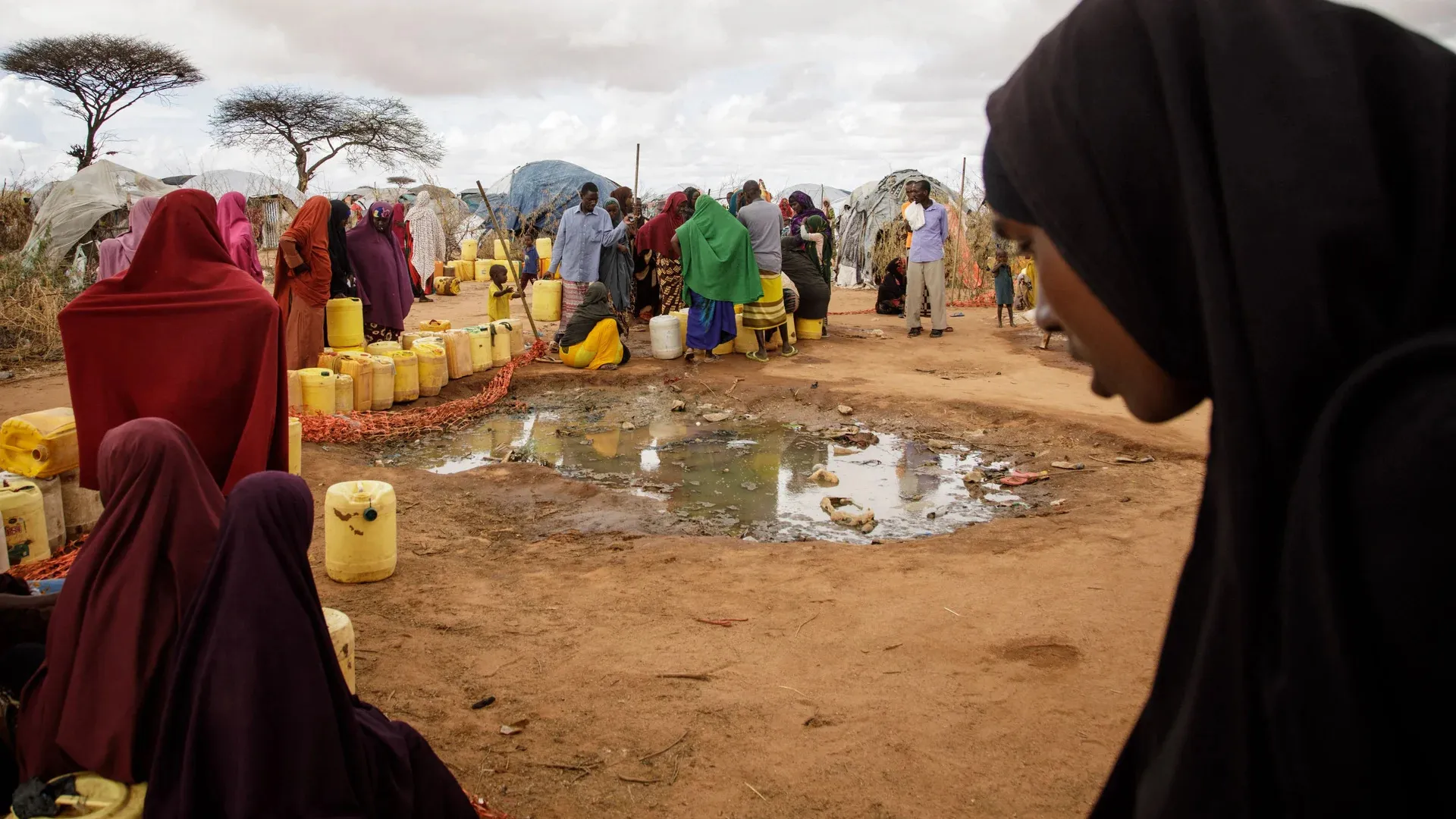
The security situation then in Somalia is still vulnerable. Somalia’s security architecture is in a transitional phase, international partners like the US and the EU are signalling reductions in funding, and the UN has faced significant budget cuts. Somalia has established new bilateral agreements on security – notably with Turkey – but the constellation of support remains fragmented and unclear. As Guled argues, this moment “reflects a gradual weakening of the security framework that has underpinned Somalia for nearly two decades, and the emergence of a more fragmented and uncertain order”. Somalia also faces a protracted humanitarian crisis, exacerbated by climate change, and domestic political instability – all of which render Somalia’s resilience against Al-Shabaab more vulnerable.
Warning signs
The recent offensives by violent extremists and armed groups in Mali signal warning signs to the Horn during this transitional period. There are some subtle differences between the situations in the Sahel and the Horn. Mali and other Sahelian states face a patchwork of jihadist challengers, from Boko Haram and JNIM, operating across porous borders. In the Horn, Al-Shabaab is a significant threat in terms of violent extremism with its strong presence in Somalia. Nevertheless, both regions are experiencing the retreat of international support and financing as well as a realignment of partners and priorities whilst armed groups have proved resilient to heavily militarised responses of different forms. And Mali and Somalia, and other states in the Sahel and the Horn, face political instability, humanitarian crises, the threat of climate change and the impact of the Iran war and an unstable international order. In this uncertain and volatile context, recent attacks in Mali demonstrate why it is a pivotal time for Somalia and other Horn states tackling violent extremist armed groups – groups which are poised to take advantage of structural instability. In order to contain the threat of groups like Al-Shabaab, funding and support streams for AUSSOM must be clarified whilst other Horn states should do what they can to support stabilisation and security in Somalia against Al-Shabaab. It is these bilateral and regional relationship and cooperation on security and development between Horn states which must be strengthened to protect the region against the threat of violent extremism and to prevent escalations like those in Mali and the Sahel.
————
Joe Meredith is a project, research and communications professional with experience working in international cooperation and diplomacy, global, national and local civil society across Kenya, Lebanon, the UK, SWANA, South Asia, the Pacific, the Caribbean and East Africa.
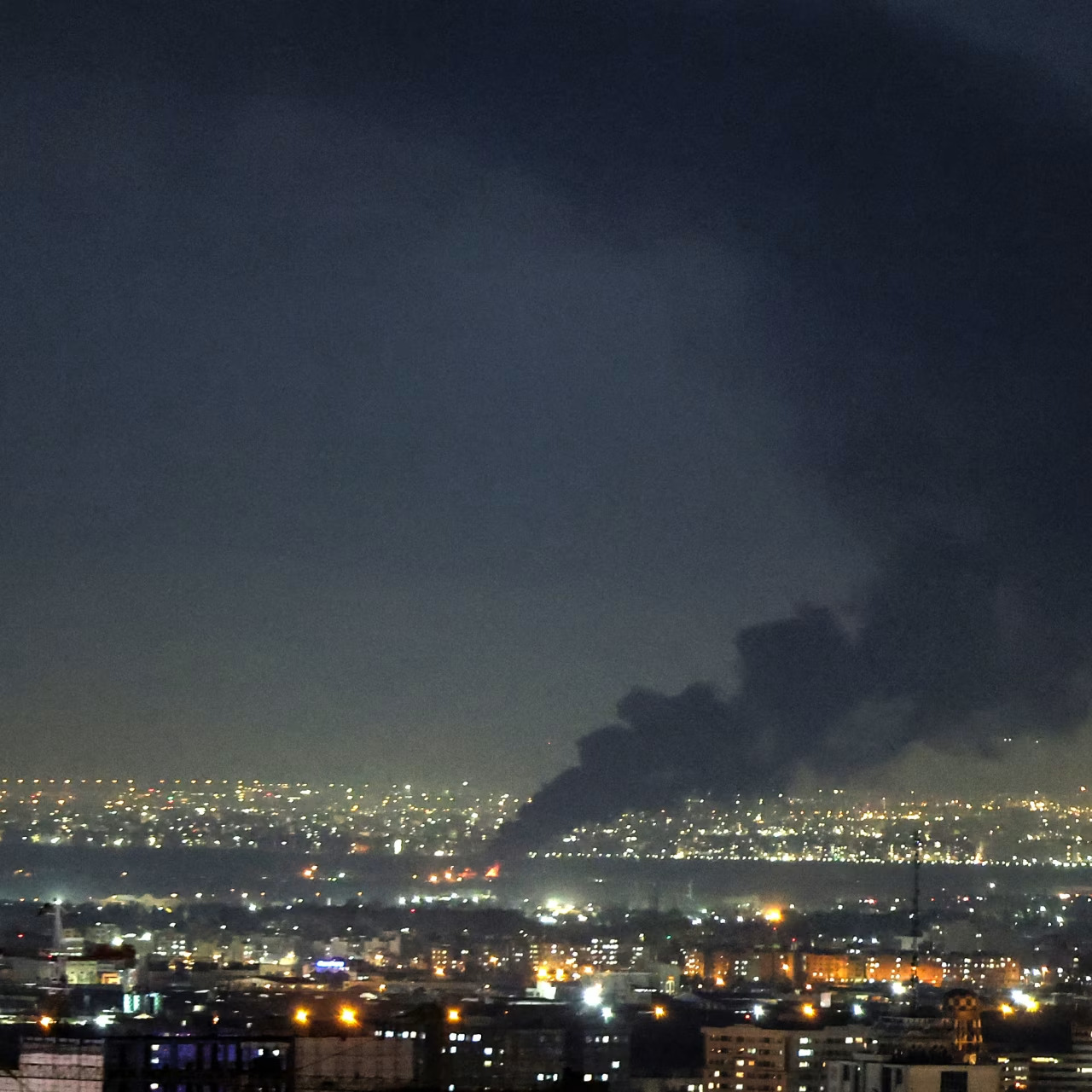
A column of black smoke rises above buildings as vehicles pass by the Africa Tower monument in Bamako, Mali, on April 26, 2026. Photo Credit [AFP]