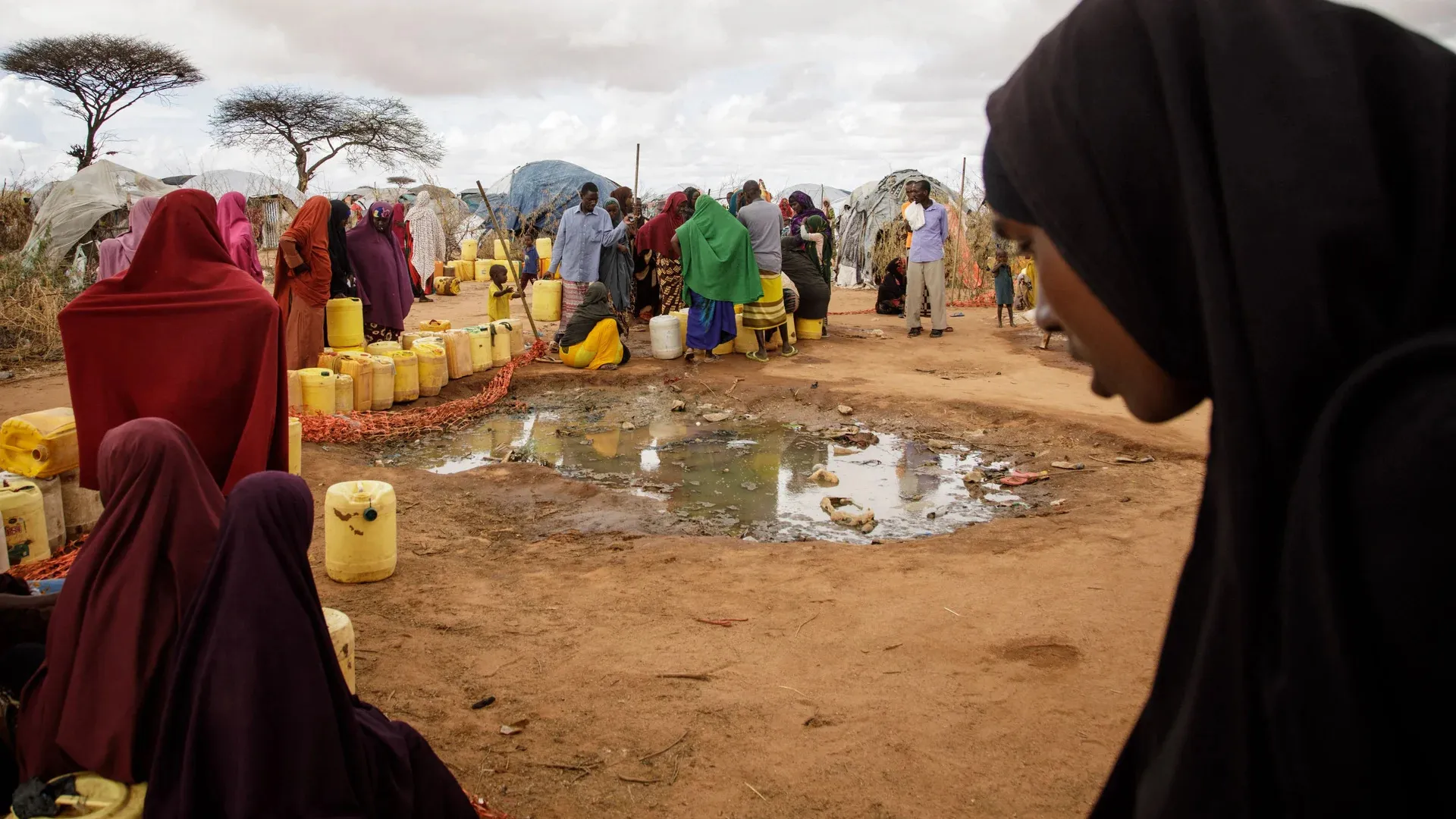
Excellencies, Distinguished Guests, Colleagues and Friends, Ladies and Gentlemen, Good morning. I am privileged to join you at the Horn of Africa Security Dialogue 2026. The HORN International Institute for Strategic Studies and the Konrad Adenauer Stiftung’s Regional deserve our collective commendation for convening this important forum and for bringing all of us together. The value of this forum lies precisely in its capacity to facilitate substantive dialogue and to translate shared insights into practical approaches for addressing the region’s most pressing challenges. The focus of this Dialogue “Navigating Regional Resilience and Security in an Era of Declining International Aid” is therefore timely and strategic. The Horn of Africa, which is home to more than 300 million people, remains a distinct and complex strategic theatre, defined by political instability, state fragility, violent extremism, humanitarian crises, and intense geopolitical competition. Furthermore, the region is increasingly interconnected to wider security dynamics extending from the Sahel to the Middle East. The Red Sea has emerged as an arena of growing strategic competition, while the militarization of the Western Indian Ocean and surrounding littoral states adds further strain to an already fragile environment. The consequences of these interconnected pressures are increasingly visible in the daily lives of 26 million people forcibly displaced, including over 19 million IDP’s and over 5.5 million refugees and asylum seekers across the East, Horn and Great Lakes.
However, despite these vulnerabilities, the Region should not be defined solely through the lens of fragility but of its immense economic potential rooted in its people, resources, and geography. How does the Horn of Africa Finance resiliency and address her security challenges in the face of dwindling aid? First, we must disabuse ourselves of the notion that aid has helped our search for sustainable humanitarian response or bolstered our security. Authors such as Dambiso Moyo in Dead Aid and William Easterly in the White Man’s Burden have problematized aid. How much aid did the Horn receive over the last 4 decades? No one probably knows precisely, thanks to fragmentation of funding and lack of transparency. Did it foster resilience and secure peace or it fed an aid complex, and enabled hierarchies and dependencies? Only when aid is long term rather than episodic, driven by national priorities rather than serving idiosyncratic donor objectives and anchored in coherent capacity strengthening can we resurrect hope in the utility of aid. A new architecture of partnership must be imagined grounded in co-creation and aligned results frameworks. A financial infrastructure that responds preventatively rather than reactively to the fraying global order.
The question before us is therefore clear: how can the Greater Horn sustain peace, stability, and humanitarian response in a region where security demands remain high while external support becomes increasingly uncertain? First, we must build regional response and capability. Regional actors like EAC, IGAD and the AU continue to respond to these challenges. However, the scale and complexity of current crises have stretched the capacities of these institutions. Sustainable peace must be fundamentally anchored in African leadership. The ideological divergence currently being experienced, should not detract us from the issue convergence, which is the pervasive need for stability in the region. The divergence is an opportunity for Africa, particularly for regions such as the Horn, to rethink the foundations of our peace and security architecture and strengthen African ownership of sustainable solutions. We must invest political goodwill on our institutions rather than export the resolution of our challenges to other spheres of influence. To do that robs us of agency, undermines ownership, delegitimizes our institutions and robs us of opportunities to build critical capacities that fosters confidence in ourselves.
Second, the new financing normal revolves around burden sharing. Africa must do more to finance her own security priorities. It is worth pointing out that, President Ruto as the AU Champion for Institutional Reforms has been advocating for enhanced African control over peace and security by revitalizing the African Peace and Security Architecture and increasing the AU Peace Fund to nearly USD 1 billion. The advocacy is bolstered by ongoing efforts to secure more stable funding for the Union, reduce dependence on outside partners, and simplify decision-making within the AU.
Third, We must strongly advocate for the implementation of international commitments supportive of African owned security responses. In this regard, the UN Security Council Resolution 2719, adopted in December 2023, which establishes a framework for the UN to provide up to 75% of the financing for AU-led peace support operations (PSOs) using UN assessed contributions stands out. This historic resolution aims to provide sustainable, predictable funding for African-led missions, requiring joint AU-UN planning and compliance with UN standards. It marks a significant shift to enhance the UN-AU partnership in addressing security challenges.
Fourth, We must nest critical logistical and technical capabilities for responding to humanitarian challenges in the continent. In times of crisis such as today, it is unhelpful that the closest UN Humanitarian Response Depot (UNHRD) is in Dubai and Brendisi in Italy. Nairobi and Accra by virtue of geography stand out as crucial locations for serving the humanitarian needs of the continent.
Distinguished Guests, Ladies and Gentlemen,
To effectively navigate this evolving global landscape, three key priorities are therefore crucial: enhance African ownership of peace and security initiatives; strengthen our institutional resilience by ensuring that institutions like IGAD and the African Union, AU Stand By Force have the necessary resources and political backing to tackle emerging threats successfully; Finally, we need to develop innovative and diverse financing mechanisms that design instruments that make security investment legible as economic interest. Corridor-linked financing (where security provision unlocks trade revenue) and pooled insurance mechanisms (where shared exposure creates shared premium logic) transform the resource mobilisation question from charity into political economy.
Over the next two days, this Dialogue will provide a vital opportunity to explore and discuss these issues in a greater depth. These conversations are essential because, many of the defining moments for Africa in 2026 will depend on the interplay between today’s world, adrift between orders, and domestic and regional interests.
Ultimately, peace and security in the Horn of Africa and the pathway to Africa’s perpetual peace cannot remain indefinitely dependent on external financing. African agency in security is not merely a governance principle; it is the structural outcome of diminishing external financing aligned with the functional rationale of regional interdependence. Kenya remains committed to working with our neighbours, regional institutions, and international partners to advance this vision. I look forward to the discussions ahead and to the insights and perspectives that will emerge from this Dialogue.
I thank you.