The resurgence of the M23 rebels in the eastern Democratic Republic of Congo (DRC) has led to renewed conflict in a region historically plagued by instability. The group, predominantly made up of ethnic Tutsi fighters, was originally disbanded in 2013 but re-emerged in 2021, causing significant violence, displacement, and regional tension. The M23 has been accused of numerous human rights abuses, posing a substantial threat to the fragile peace in the Great Lakes region. The group was initially formed in 2012 by a faction of the National Congress for the Defense of the People (CNDP), a rebel group that had previously fought against the Congolese government. The CNDP was integrated into the Congolese national army as part of a 2009 peace agreement, but many former fighters felt the government failed to uphold its commitments, leading to the creation of the M23. The M23 quickly gained notoriety for its ability to seize and hold territory, including the major city of Goma in 2012. However, by 2013, the group was defeated by the Congolese army and a United Nations Intervention Brigade, forcing its fighters to flee to Rwanda and Uganda. Despite this defeat, the underlying grievances of the Tutsi community in eastern Congo, including fears of persecution and marginalization, were never fully addressed, setting the stage for the group’s eventual resurgence.
The Resurgence.
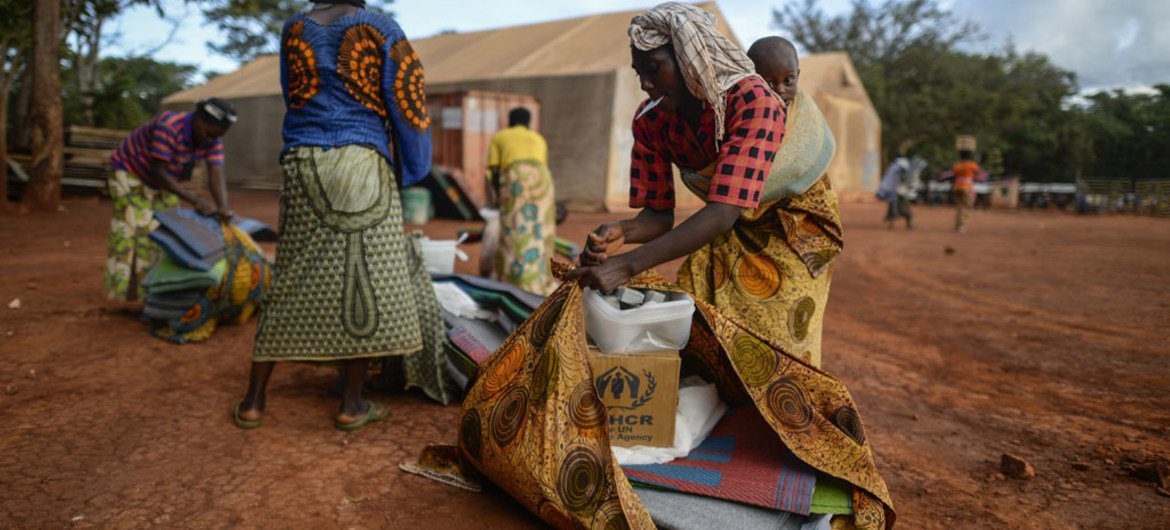
In late 2021, reports emerged of M23 fighters regrouping and launching new attacks in the North Kivu province. By early 2022, the group had reclaimed significant territory, leading to the displacement of tens of thousands of civilians and reigniting ethnic tensions in the region. The resurgence of M23 has been attributed to various factors, including the failure of the Congolese government to address long-term solutions for ethnic reconciliation, continued interference from neighboring Rwanda, and the ongoing struggles with governance and corruption in the Democratic Republic of Congo (DRC). The M23’s resurgence has worsened the already dire humanitarian situation in eastern Congo. According to the United Nations, over 450,000 people have been displaced due to the renewed fighting, adding to the millions already displaced by decades of conflict. Recent clashes between the rebels and army forces have escalated, forcing communities to seek safety on the outskirts of Goma. By the end of May 2022, 72,000 people had been displaced in Rwanda. President Kagame has accused both Congo’s army and the United Nations Stabilization Mission in DRC (MONUSCO) of collaborating with the Democratic Forces for the Liberation of Rwanda, whose leaders took part in the 1994 genocide in Rwanda.
In response to the resurgence of attacks by M23 rebels in the eastern region of DRC, the Southern Africa Development Community (SADC) has started contributing groups to its mission. However, peacekeepers deployed to eastern Congo as part of the SADC mission were killed and wounded by rebel mortar fire during an attack, raising concerns about the effectiveness of the Southern African Mission in DRC (SAMIDR) in reducing conflict. Despite the challenges, the international community has been assisting DRC towards peace. For example, Kenya has recently deployed the Kenya Defense Forces to join MONUSCO in Congo for further stabilization efforts.
International and Government Response.
The re-emergence of the M23 rebel group has sparked widespread outrage from the global community. International organizations such as the United Nations, African Union, and European Union have united in demanding an immediate ceasefire and encouraging the Congolese government to seek peaceful resolutions. The UN’s MONUSCO (United Nations Organization Stabilization Mission in the Democratic Republic of the Congo) has been actively involved in trying to stabilize the region. MONUSCO has provided support to the Congolese army in their operations against the M23 and has worked to protect civilians caught in the conflict. Despite criticism over its effectiveness, MONUSCO continues to play a crucial role in mitigating the impact of the conflict. Additionally, Western nations, including the United States, have imposed sanctions on prominent M23 figures and individuals suspected of aiding the group from Rwanda. Rwanda’s involvement in the conflict has been a contentious issue, with the Rwandan government consistently refuting accusations of supporting the M23 rebel group.
The ongoing dispute has strained relations between Rwanda and the Democratic Republic of Congo. Tshisekedi’s administration has initiated multiple military offensives to retake territory captured by the rebels. However, these efforts have been hindered by poor coordination within the military and the challenging terrain of eastern Congo. Furthermore, the government has enlisted the help of local militias, known as “Mai-Mai,” to support the fight against M23, resulting in further complexities and instances of human rights abuses. Despite facing many challenges, there have been efforts to address the root causes of the conflict. In 2023, the DRC government began new peace talks with the M23, facilitated by the East African Community (EAC) which focused on integrating M23 fighters into the national army, protecting minority communities, and fairly distributing resources in the region. However, progress has been slow, with the M23 still launching attacks while the negotiations are ongoing.
Way Forward
The Congolese government must strengthen its commitment to governance reforms, including improving the rule of law and ensuring that the military is well-trained and equipped to protect civilians. Additionally, there needs to be a greater focus on ethnic reconciliation and the protection of minority communities, particularly the Tutsi population, who have been historically marginalized in the region. Regional cooperation is also crucial. The DRC must work with neighboring countries, including Rwanda and Uganda, to address cross-border issues and prevent external support for rebel groups. This could involve confidence-building measures, joint security operations, and the establishment of mechanisms for peaceful dispute resolution. The international community continues to support peace efforts in the DRC through diplomatic engagement, targeted sanctions, and the provision of humanitarian aid. There should also be more such as the Nairobi and the Luanda process which focuses more on disarmament, demobilization, and reintegration (DDR) programs for former combatants. These programs should provide alternative livelihoods and address the root causes of recruitment into armed groups.
Photo Credits: MONUSCO Media via X
Lamiya Musa is a Research Intern at the HORN Institute.
The views expressed in this article are those of the authors and they do not necessarily reflect the position of the HORN Institute.