South Sudan is a country deeply scarred by centuries of Egyptian, British, and Sudanese colonialism, slavery, and genocide. The legacy of these successive dominations has not merely left institutional voids – it has actively shaped a political culture in which power is exercised through patronage, coercion, and ethnic mobilisation rather than through accountable governance. Autonomy in 2005 and formal independence in 2011 meant that Khartoum shed its role as colonial overlord. It did not mean, however, safety or peace for the South Sudanese people.
As the South Sudanese guerrilla movement, the SPLM (Sudan People’s Liberation Movement), transitioned from liberation army to a one-party independent state, it carried with it the internal fractures that had long simmered beneath the surface of the armed struggle. The movement’s consolidation of power opened an old rift between its elites – a division running largely, though not exclusively, along ethnic lines. The ensuing civil war, fought between 2013 and 2018, produced one of the worst humanitarian catastrophes of the 21st century: approximately 4.5 million people were displaced, representing nearly 40% of the total population, and an estimated 380,000 excess deaths occurred, of which around 190,000 were directly violent.
Elite Rule, Clientelism, and the Failure of Peace
Today’s ruling elites have remained the same, and their rift has endured. The Dinka President Salva Kiir, born in 1951, has held his position continuously since 2005 and has only faced an election once, in 2010. The Nuer Vice-President and head of the SPLM-IO (In Opposition), Riek Machar, born in 1950, has likewise occupied his position almost without interruption since 2005, barring the war years. Their co-governance is less a partnership than a managed standoff – a fragile arrangement that preserves elite interests while the broader population bears the consequences.
The clientelist logic underpinning both leaders’ rule has been at the root of South Sudan’s woes for decades. South Sudan has been consistently ranked as the most corrupt country in the world: Transparency International awarded it a score of just 9 out of 100 in the most recent assessment, on par with Somalia. Yet the contrast between the two countries’ trajectories is striking. Somalia, despite its fragility and the ongoing threat of Al-Shabaab, has made a deliberate and costly wager on state-building, institutional capacity, and a constitutional political process – at significant risk to its near-term stability but with long-term transformation in view. South Sudan has made no such wager. Neither genuine peace-building nor state-building has ever been seriously attempted.
The peace architecture constructed in the wake of the civil war has proven particularly hollow. The 2015 Compromise Peace Agreement and the 2018 Revitalized Agreement on the Resolution of the Conflict in South Sudan (R-ARCSS) were flouted from day one, giving rise to the necessity of a third agreement – the 2020 Rome Declaration – brokered by Sant’Egidio. Key transitional benchmarks have been systematically deferred. The country continues to function under a provisional constitutional arrangement rather than a permanent national constitution. The number of states has been revised four times in fifteen years, each change reflecting opaque elite bargaining rather than any principled administrative logic. A national census and voter registration – minimum prerequisites for credible elections – have not been conducted, and will not be completed before the December 2026 elections, themselves already delayed twice.
Oil, Foreign Influence, and Captured Revenues
South Sudan’s foreign policy has likewise been shaped by the logic of patronage-seeking rather than strategic interest. Successive governments have cultivated the favour of the United States, Israel, and the UAE. Neighbouring Uganda has exercised significant military and political influence since independence. Russia and China have also expanded their foothold, China principally through economic channels. CNPC (China), Petronas (Malaysia), and ONGC (India) are the principal shareholders in the exploitation of South Sudanese oil – an arrangement that has generated revenues without producing development.
Upon independence, the vast majority of what had been Sudan’s oil production became South Sudan’s – but it continues to transit northward through Sudanese territory to Port Sudan for export. Oil has since remained the sole source of state revenue and the only significant item of foreign trade. Yet the wider population and basic public services have failed to benefit. Revenues have been captured by the political and military elite, funding patronage networks and security forces rather than healthcare, education, or infrastructure. The country’s oil wealth has thus served to entrench the very system that prevents development.
A recent report by the UN Commission on Human Rights in South Sudan has laid bare the consequences of this system with stark clarity. Widespread corruption and brazen predation have hollowed out state capacity – not because the state is failing, the Commission noted, but because it was never meaningfully built. This institutional vacuum directly aggravates an already dire humanitarian situation, motivates mass human rights abuses, and perpetuates cycles of violence across the country’s communities.
A Protracted Humanitarian Crisis and the Path Forward
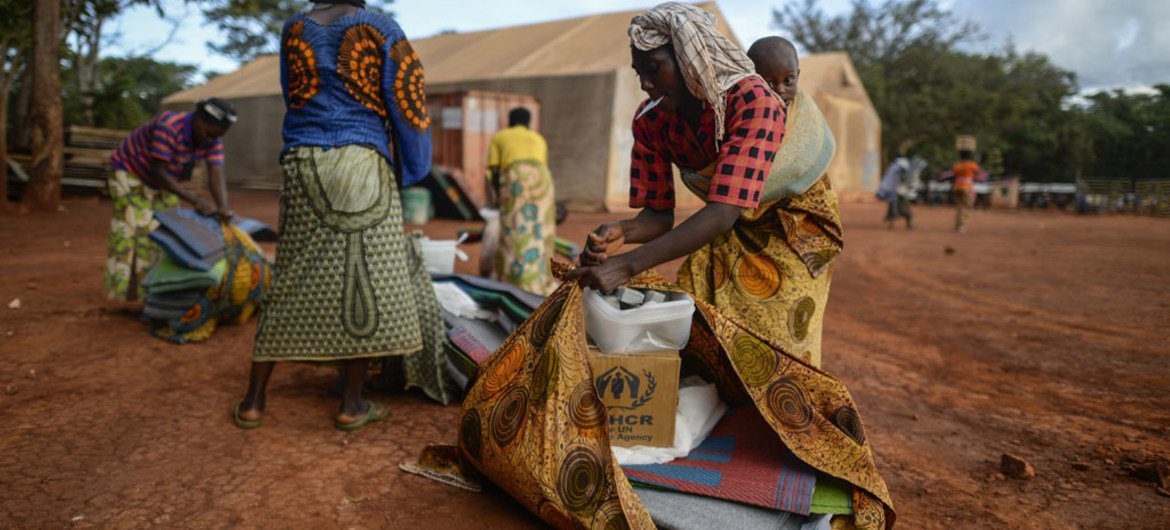
The humanitarian data paint a picture of a country in protracted crisis. Before the most recent relapse into conflict, 78% of the population was already in need of humanitarian assistance. Some 53% were experiencing critical hunger – IPC Phase 3 or above – a level that represents a structural failure, not a temporary emergency. Floods affected approximately 890,000 people, compounding displacement and destroying what little agricultural capacity remained. At the same time, South Sudan was recording its worst cholera outbreak on record, a reflection of the near-total collapse of water and sanitation infrastructure.
South Sudan’s situation is not one of a state struggling to perform – it is one of deliberate non-performance, where the architecture of governance has been captured and repurposed to serve elite survival rather than public welfare. Understanding this distinction is essential for any meaningful engagement with the country’s future. Humanitarian response, however well-intentioned and necessary, cannot substitute for the political transformation that South Sudan has yet to begin.
Photo Credits: Reuters.
Dr. Mathieu Gotteland is a independent scholar and researcher of history of international relations, his research interests include informal imperialism, terrorism, hybrid and secret warfare, and the dynamics of international and non-international conflict, particularly in Africa.