From Central to the West and Eastern Africa, the continent is an electoral season likely to prove perhaps more destabilizing than armed conflict. In more than a dozen countries, among them Cameroon, Ivory Coast, Guinea Bissau, Tanzania, Guinea and Uganda, the ruling elites are tightening their grip ahead of polls and in the face of increasingly frustrated publics. The elections, staged under the veneer of constitutional order, risk pushing these fragile countries to the brink. In these countries where all democratic guardrails long fell, the last bastion – the people, are at their breaking point and will most likely rise to challenge the status quo if they lose the opportunity through the elections. The trigger is likely to be when “forever presidents” and long-ruling political parties, entrenched through decades of patronage, systemic crackdown of the opposition and constitutional manipulations, fail to read the public mood and bungle the elections.
The Forever Presidents
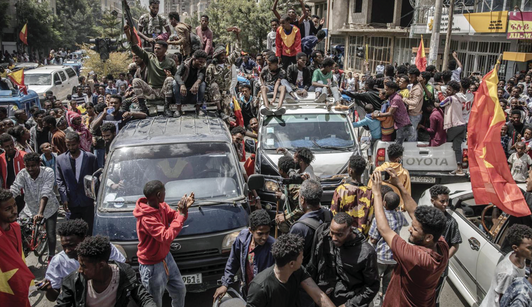
Cameroon’s 92 year old President Paul Biya, in power since 1982, has just controversially “won” his eighth term with 53 per cent of the vote against his main opponent, Issa Bakary. Over the four decades, Biya has presided over hollow elections, with the longevity of his rule only being matched by its indifference to reform. Corruption, hollowed out public institutions, economic stagnation under debt and mismanagement, an unresolved separatist Anglophone crisis, and rising youth unemployment drive public frustration against President Biya. On the other hand, opposition figures have faced systemic harassment and limited space for mobilization. With the controversial October elections, in which President Biya seeks to extend his 43 year rule, Cameroon is likely to plunge into instability for weeks or months to come, as Issa Bakary, who announced his own victory earlier, has refused to concede. The youth, pushed by unemployment and poverty, as well as anxiety around the “never-coming” political change, have joined Bakary in the streets.
In Uganda, the 81 year old President Yoweri Museveni, who has ruled since 1986, is also seeking his eighth term, having eliminated credible opposition, Kizza Besigye, by detaining him since November 2024. As the elections slated for January 2026 draw closer, only Robert Kyagulanyi alias “Bobi Wine”, a weak but youthful opposition, remains in the race to suffer systemic repression as campaigns kick-off. With a youth unemployment rate around 5 per cent, corruption endemic, and insecurity persistent, especially in the northern and eastern regions, a popularly felt disenfranchisement in the upcoming elections might trigger a volatile aftermath or deeper apathy as the public becomes increasingly disenfranchised in Uganda.
Elections to watch
But nowhere in Africa is democracy at its weakest as West Africa. Ivory Coast’s 83 year old President Alassane Ouattara, has also “won” his fourth term with 89.7 per cent of the vote, having barred his main opponents, former President Laurent Gbagbo and former Credit Suisse executive Tidjane Thiam. Having once promised generational change and amended the constitution to secure a third term in the controversial 2020 elections. Ahead of the October 25th elections, and aware of public and political tensions, President Ouattara heavily muzzled and banned any protests. The triple crises of high youth unemployment, high cost of living and the shutting window of change might trigger unrest as Outtara wins re-election.
In Guinea Bissau where chronic political instability, fueled by military interference, capricious dissolution of parliament and opposition crackdowns, elections are increasingly becoming a flashpoint as President Umaro Sissoco Embaló, whose term expired in September, has clashed with both the opposition and the Supreme Court, as he seeks to extend his rule despite the concomitant institutional crisis. The main opposition, led by Domingos Simoes Pereira, won a parliamentary majority in 2023, but President Embaló has systemically thwarted Pereira’s efforts to form a government by delaying parliament, which he dissolved in 2023, from reconvening. Parliament appoints the members of the National Election Commission and elects the president of the Constitutional Court, whose mandates have also expired, hence no legitimate body to preside over the upcoming elections. An election postponement is thus more likely to occur. However, the president is also blocking Pereira from the November 23rd elections, further straining the coup-prone country’s fragility and making it one of the most volatile electoral hotspots in Africa this year.
In Eastern Africa, democracy in Tanzania is quietly suffocating under President Samia Suluhu’s chokehold. From media restrictions and uneven electoral reforms limiting the opposition, to crackdowns and detention of credible opposition leaders, President Suluhu and the long-ruling Chama Cha Mapinduzi (CCM) party are keen on insulating total dominance. If the upcoming elections, already lacking the participation of credible opposition groups given the detention of the main rival Tundu Lissu and the ban on his party, CHADEMA, fail to convince citizens of genuine reform, Tanzania could see its decades of calm crack under the weight of suppression and repression.
South Sudan which has not carried out any democratic elections since its independence in 2011 and has postponed elections five other times, partly leading to the 2016-2018 civil war. The fragile country stares at a high prospect of the planned December 2026 elections being a flashpoint either due to yet another postponement on the grounds of budgetary or security constraints with factional clashes intermittently breaking out, or exclusion of key figures especially the detained First Vice President, Riek Machar. Democratic elections are a key milestone for stabilizing South Sudan as per the 2018 peace agreement.
Somalia is also likely to experience either an election crisis or post-election crisis, based on acrimonious contestations and lack of political consensus on the electoral model for June 2026 elections. The electoral laws passed in 2024 to transition the country from clan-based indirect electoral model to universal suffrage have not received wide political support from opposition groups. With the escalating Al Shabaab insurgency, security challenges are bound to compound Somalia’s other election preparedness challenges including budget, logistics and technology. Such an environment undercuts the credibility of the election process and complicates legitimacy for the winner.
Lastly, Ethiopia faces an increasingly challenging political landscape in which the June elections 2026 might attract legal, practical and political controversies and spark a crisis. The seething armed conflicts or instability in Oromia, Amhara and Tigray regions of the country are likely to complicate logistical and practical conditions, while widening elite contestations at sub-national and national levels might also undermine democratic elections in Ethiopia.
The Breaking Point
Africa’s electoral map is crowded not with democracies in progress, but with regimes that use elections to mimic legitimacy. However, the years of unfulfilled promises, rising youth unemployment, poverty, and systemic corruption have hardened public resentment and melted away the façade. Africa’s youth, over 60 per cent of the continent’s population, anxious about their shrinking futures as elites entrench dynasties of privilege and power, might be the most destabilizing demographic as they rise against the status quo, triggered by bungled elections.
The international community can no longer treat Africa’s democratic backsliding as a local affair. The security challenge that is likely to emanate from the unfolding election-related tensions in Cameroon, Ivory Coast, Guinea Bissau and Tanzania will affect regional security and global peace. The African Union (AU) and respective regional economic communities must be proactive by strengthening early warning and response systems for electoral crises and violence, as well as electoral monitoring and enforcement mechanisms, to avoid reactionary sterility when unrest escalates beyond national authorities’ control. The international community should also initiate preventive diplomacy and institute necessary measures to forestall the contagion of instability, gradually enveloping Africa from the ballot box.
As the current electoral events are showing, Africa’s stability will not crumble under the weight of war alone; it will crumble under the collapse of trust in democracy. The continent’s next great challenge may not be insurgency or terrorism, but the cynical normalization of repression under electoral banners. If the current and upcoming elections in Africa are allowed to proceed as mere coronations, the continent’s next wave of instability will not be fought in the bush, but born at the ballot box.
Photo Credits: Reuters.
Edmond Pamba is a Researcher at the HORN Institute.