As German Foreign Minister, Johann Wadephul concluded his visit to Nairobi, his first to Africa since assuming office in May 2025, the significance lay not in the symbolism but in what it revealed about Kenya’s position and Germany’s evolving role in the fragile security architecture in the Horn of Africa.
Kenya and Germany enjoy a long-standing strategic partnership anchored on shared values and mutual benefit. However, in the face of growing global uncertainty characterized by polarization and the erosion of multilateral cooperation, this diplomatic bond is now entering a demanding phase especially when Kenya’s peace and security burden in the Horn of Africa has dramatically increased as major traditional players increasingly recede. The visit by the German foreign minister therefore offers a vital opportunity to deepen bilateral cooperation especially in the Horn of Africa, where Kenyan and German interests increasingly converge.
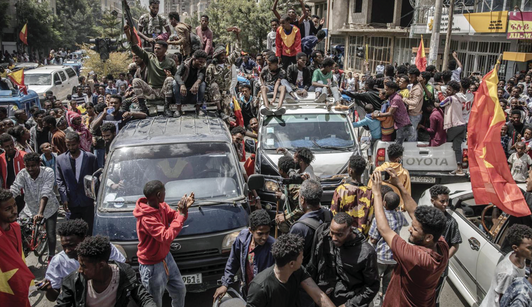
Today, the Horn of Africa sits at the intersection of protracted conflicts and intensifying great and middle power rivalry. The protracted war in Sudan, has produced one of the world’s worst humanitarian crises, the United Nations estimates that 33.7 million people around two thirds of the country’s population needs humanitarian assistance. In Ethiopia, the post-Pretoria settlement remains fragile, while renewed tensions between Ethiopia and Eritrea over Addis Ababa’s maritime ambitions in the Red Sea risk opening a new flashpoint. In Somalia, Israel’s recognition of Somalia’s break-away region of Somaliland has introduced a new layer of complexity in an already fragile security environment, as forces within Somalia and region express rejection of Israel’s move while al-Shabaab intensifies its rhetoric against Somaliland and the Houthis frame the recognition within broader Red Sea politics.
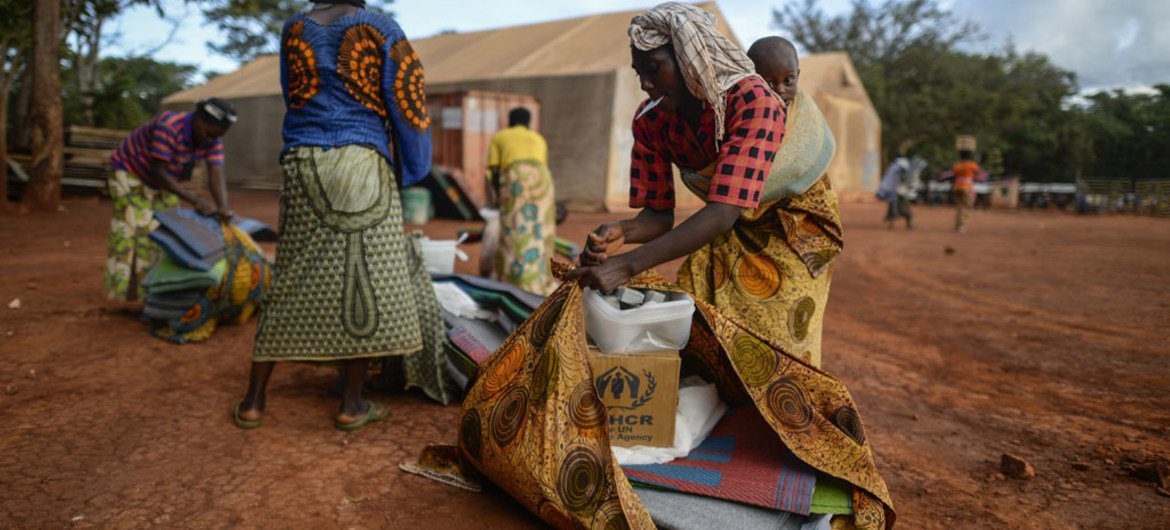
For Kenya, these dynamics are central to its peace and security role as the anchor state of the region. Kenya currently hosts more than 830,000 refugees and asylum seekers fleeing conflicts in neighboring countries, including Somalia and South Sudan; new conflicts would not only threaten Kenya’s own security but also its capacity to respond to humanitarian emergencies. With global funding for humanitarian responses now acutely underfunded given the UN funding freeze by the United States of America, Kenya is left to search for new partners or mobilize more resources, to better prepare for humanitarian emergencies and refugee situation it now faces.
The Horn of Africa is also experiencing destabilizing involvement of external powers in regional conflicts, which not only risks regional security but also risks the fragmentation of countries such as Sudan and Somalia. Geopolitical rivalry and proxy sponsorship of factions in regional conflicts is significantly undermining the effectiveness of regional peace and security institutions such as the Intergovernmental Authority on Development (IGAD), which Kenya has long relied on for regional conflict prevention and management.
As Washington scales back its traditional role in the Horn of Africa and reduces multilateral funding, responsibility for sustaining diplomatic engagement and values-based security cooperation is increasingly shifting to other global powers like Germany. This explains Berlin’s appointment of a Special Envoy for the Horn of Africa in 2023, who is based in Nairobi and works closely with the European Union Special Envoy for the region.
Kenya can thus leverage on Berlin’s Special Envoy in the region and Berlin’s investment in strengthening regional institutions as tools for economic cooperation and conflict management, to revive vibrancy in the African Union and IGAD as key partners. Since 2021, Germany has committed 135 million Euros to IGAD, with more than fifteen major programmes in all its member states. However, this multilateral institution-centered approach is increasingly constrained by the growing influence of Gulf states in the Horn of Africa. Often operating through bilateral security arrangements and support for competing local actors, these engagements have weakened regional institutions and undermined their capacity to manage and resolve conflicts.
These pressures are further compounded by expanding humanitarian crises, which are testing Germany’s capacity to sustain its commitments to development assistance. Germany is Africa’s second-largest bilateral donor after the United States of America. However, domestic economic constraints have forced Berlin to rethink its aid commitments. Over the period 2023–2025, its official development assistance to Africa saw a decline of approximately 3.1 billion dollars, representing a 10.5 per cent reduction. Kenya can leverage on the deepening Kenya-Germany relations, to lobby for policy consideration towards increasing the humanitarian support to the Horn of Africa as one of the most stabilizing interventions in the region.
Lastly, Kenya can leverage on the Third International Conference on Sudan, which will be co-hosted by Germany and the African Union in Berlin, April 2026, as the best platform to champion not just humanitarian support for Sudan but also peacekeeping operations support. A rescue plan for funding active missions in Somalia, South Sudan, Democratic Republic of Congo, Central African Republic among other conflict theaters in the region is an agenda Kenya can advance. Kenya can further advance re-engagement on the conflict in Sudan, given Germany’s influence within the European Union.
Through such strategic positioning and cooperation, Kenya and Germany would not only stand up for shared values and immediate humanitarian needs in the Horn of Africa but also strengthen Kenya’s role as a vital anchor for the region’s long-term security and stability.
Judy Mbugua is a Communications Intern at The HORN Institute.