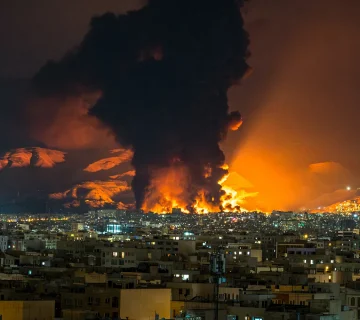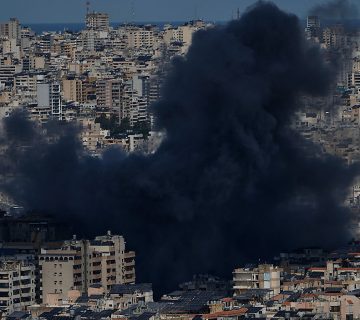
What began as a joint US-Israel military strike on Iran has rapidly evolved into a conflict whose shockwaves are reverberating well beyond the Middle East. As the Strait of Hormuz; one of the world’s most critical maritime chokepoints – faces disruption and the ripple effects are being felt thousands of kilometres away across the African continent. For Africa, a region already grappling with economic fragility, food insecurity, and political instability, this conflict represents far more than a distant geopolitical crisis.
Geographically, Africa is removed from the battlefield. But geography offers no protection in an interconnected global economy. History has repeatedly demonstrated that conflicts in the Middle East cascade rapidly – through energy markets, food supply chains, currency fluctuations, and political alignments into devastating consequences for African states. The ongoing war on Iran is no different, and in several respects, it may prove more consequential than any previous Middle Eastern crisis for the African continent. This article analyses the immediate and structural impacts of the conflict on Africa, with particular attention to the Horn of Africa a sub-region that is uniquely exposed by virtue of its geography, its security entanglements, and its deep economic ties to the Gulf.
Economic Shockwaves
The most immediate and tangible impact of the conflict on Africa is economic, operating through three interconnected channels: rising fuel costs, remittance disruption, and rapidly deteriorating food security. Fuel prices are climbing steeply as supply chains fracture. With the Strait of Hormuz effectively becoming a flashpoint, global oil flows face unprecedented disruption. African nations the overwhelming majority of which are net energy importers — are acutely exposed to this shock. Oil price surges are already being projected, and the downstream effects on transport costs, electricity generation, and manufacturing are profound. Historical data offers a grim benchmark: during the 2022 Russia-Ukraine war, African inflation surged from an average of approximately 4.5% to 9.5%. A 10% increase in oil prices alone is estimated to push African inflation upward by around 2% – devastating for populations in which a significant proportion of household income is spent on food and basic essentials.
The second channel is remittances. Millions of Africans are employed across the Gulf states, and their earnings represent a critical source of foreign exchange for their home countries. Kenya alone has an estimated 500,000 citizens working in the region. Any sustained disruption to Gulf employment, whether through economic contraction, heightened conflict, or mass evacuations would impose severe fiscal strain on remittance-dependent economies across East Africa and the Horn.
Perhaps the most alarming medium-term consequence is the threat to agriculture. Critical components used in the manufacture of fertiliser are sourced and shipped from the Middle East. With planting seasons already underway across sub-Saharan Africa, any sustained disruption to fertiliser supply will directly translate into reduced crop yields, food shortages, and further price spikes outcomes with catastrophic humanitarian implications for populations already living on the margins.
It is important to recognise that the conflict’s economic impact is asymmetrical across the continent. While oil-importing nations such as Kenya, Morocco and Ghana face severe cost pressures, oil-exporting nations; Nigeria, Angola, Algeria, Libya, and Equatorial Guinea may enjoy short-term revenue windfalls. However, this apparent gain is deceptive. Most African oil producers also import refined petroleum products, meaning crude export revenues can be easily cancelled out by higher import bills. Short-term windfalls, history tells us, rarely translate into long-term development gains in the absence of sound governance and strategic investment of those revenues. Meanwhile, with the Strait of Hormuz disrupted, more global trade may be rerouted around the Cape of Good Hope, potentially offering South Africa a strategic opening as a maritime hub though at the cost of longer supply chains and higher consumer prices across the continent.
The Horn of Africa’s Security Architecture Under Pressure
For the Horn of Africa specifically, the security implications of the US-Israel-Iran conflict are both immediate and potentially catastrophic. The sub-region occupies a uniquely precarious position: it flanks the Red Sea and the Gulf of Aden, sits in close proximity to Yemen, and hosts a concentration of foreign military bases that make it a node in global power competition. Djibouti, the most militarised country per square kilometre on the African continent is a case in point. The presence of American, French, Chinese, and other foreign military installations does not, in itself, guarantee Djibouti’s security. On the contrary, it may amplify the country’s exposure. Gulf states hosting US military bases have already found themselves drawn into Iran’s retaliatory calculus. The same logic applies to Djibouti and other Horn of Africa states that host foreign forces.
The Houthi movement in Yemen adds another volatile dimension. As an Iranian-backed force that has already demonstrated its capacity and willingness to disrupt Red Sea shipping, the Houthis represent a direct threat to the maritime arteries on which the Horn of Africa’s trade and economic survival depend. Should the war intensify and Iran seek to activate all available proxy forces, Red Sea shipping disruptions could become sustained rather than episodic, with severe consequences for the economies of Djibouti, Somalia, Ethiopia, and Kenya. There is, however, a potential but fragile silver lining within the security landscape. Iran’s reduced capacity to supply arms to the Sudan Armed Forces constrained by the demands of a war on its own soil may inadvertently weaken one faction in Sudan’s devastating civil war. Similarly, the Gulf states’ diminished attention and resources may reduce the flow of external support to the Rapid Support Forces (RSF). This dual reduction in external military backing could, under the right diplomatic conditions, create an opening for de-escalation in Sudan though converting this window of opportunity into meaningful peace will require urgent and coordinated regional diplomacy.
Crisis as Catalyst for Strategic Renewal
The US-Israel war on Iran is not Africa’s war. But its consequences will be felt deeply and durably across the continent, and most acutely in the Horn of Africa. At its core, this conflict is not merely an external shock to be endured. It is a mirror held up to Africa’s structural fragilities revealing decades of import dependency, governance deficits, under-investment in productive capacity, and a chronic inability to speak with a unified continental voice on matters of global consequence. Yet embedded within the crisis are genuine opportunities: to position African energy and minerals as indispensable global alternatives, to diversify trade and diplomatic partnerships, to accelerate the continent’s renewable energy transition, and to reset Africa’s relationship with great power rivals on more sovereign and equitable terms. Africa possesses the resources, the youthful demographic dividend, and the strategic geography to be a consequential actor in the reconfigured world order that is now rapidly taking shape. What remains in question is whether African leaders and particularly those governing the volatile and exposed nations of the Horn possess the political will, the strategic vision, and the institutional capacity to seize this moment rather than merely survive it. Africa has a young population. There is still time to replan, re-energise, and strategize. But the window will not remain open indefinitely.
Photo Credits: Gideon Markowicz / Reuters